• Home
  • About
  • Besselink Project
  • Academia
  • Studio
  • Blog
  • Podcast
  • Testimonials
  • Work With Me

Allan Besselink

Rhubarb Ruminations: Episode 4

Saturday, 21 August 2010 11:15 Written by Allan Besselink

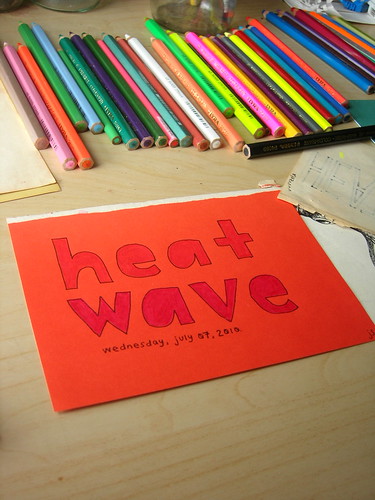
heat wave (July 7, 2010)I will be the first to admit: the dogs days of summer have gotten the better of me. And the way the summer has gone thus far in the news world, if you’ve already poked fun at BP, then you pretty well have the summer’s news covered.

You would think that this be a good time to simply sit down and write while enjoying the cool air conditioning and a cold unspecified and to-be-named-at-a-later-date beverage? For those that live in Texas, you know what happens though – the heat just saps the maple syrup right out of you (insert much Canadian laughter here).

In the midst of sweating my way through the summertime blues, there was time for another episode of Rhubarb Ruminations.

#1: Roger Clemens was indicted by a federal grand jury for allegedly lying to Congress. So, hold the presses here. Before people start jumping to conclusions, this is not about whether he did or did not take steroids. This is about whether or not he lied. So, Polyanna, why are we so surprised that lies and deceit exist in the hallowed halls of Congress, on either side of the table? Legislators do this day in and day out – without any congressional (or judicial) impact whatsoever.

But perhaps the bigger question is this: what the hell is Congress doing putting good money and time into Congressional hearings on steroid use in baseball in the first place? This is an issue that needs to be resolved by Major League Baseball (and I am looking at you, Mr. Selig), not our legislators.

Sure, we’d all like to know if Barry Bonds was juiced when he broke Aaron’s record. Fair enough. But is it illegal, in the United States, to consume human growth hormone or steroids?

Read more...

Hamstring Strains, Lumbar Pain, And Clinical Reasoning

Tuesday, 17 January 2012 22:21 Written by Allan Besselink

disguiseAs a clinician working with a sports population, I have seen my fair share of what I would call traditional hamstring strains. They are common in sports that involve sudden acceleration and/or deceleration.

These types of problems may appear to be simple to sort out as you listen to the patient history. Pattern recognition is important in the clinical reasoning process – but with that said, attention must be paid to those aspects of the clinical picture that don’t fit the pattern.

It is easy for clinicians to lose sight of one simple fact: the lumbar spine can refer pain throughout the lower extremity and can produce signs and symptoms that can mimic virtually any lower extremity disorder. We can thank our neurological “wiring” for this phenomenon. Understanding the behavior of the system under mechanical loading becomes critical for an accurate mechanical diagnosis, and subsequently an appropriate treatment intervention.

Over the past few months, I have seen quite a number of “hamstring strains” that were really a wolf in sheep’s clothing. They were lumbar spine issues that were mimicking hamstring signs and symptoms.

Read more...

Three Reasons Why Contador Is Not The Next Armstrong

Tuesday, 10 August 2010 23:05 Written by Allan Besselink
Lance Armstrong at the 2005 Tour de France.Sunday 7/25/2010 was a sad day for Austin and for the cycling world. It marked what many expect to be the official end to Lance Armstrong’s distinguished cycling legacy, his farewell day in his final Tour de France.

It was an unlucky 13th Tour de France for Armstrong. He had a tire puncture at a highly inopportune moment on the cobblestones. He also had more crashes in this one Tour than he’d suffered in his previous 12 Tours combined. It was not an easy go of things for Armstrong in his final dance through the French countryside. But as they say, c’est la vie, non?

We’ve already heard talk of whether or not Alberto Contador could possibly eclipse Armstrong’s record seven Tour de France victories. He’s currently on top of the world cycling, and he looks to have a strong future ahead.

But there are some huge contrasts which serve to bring one recurrent theme to the forefront. Alberto Contador is no Lance Armstrong – and for oh so many reasons. Contador could indeed be the next great Tour de France champion. But right now, he’s got a lot to learn and much of it, as Lance would say, is not about the bike. It’s about the man.

What made Armstrong so special? And how could Contador take a few notes for the future?

Read more...

Thursday, 12 January 2012 17:24 Written by Allan Besselink

201107-WMAThis is the seventh in a series of RunSmart videos. The series is on-going, with a new video released on a biweekly basis. These videos complement the material presented in the book “RunSmart: A Comprehensive Approach To Injury-Free Running”. The full series of videos can be found here. A transcription of the video will also be available with each post.

For those of you that are interested in a more interactive learning environment, consider attending a RunSmart Level One, Level Two, or Level Three program. Level One focuses on Principles, Level Two on Performance and Training Program Development, and Level Three on Physiotherapy and Running Injury Recovery. CCU credit for physical therapists is available for Level One (3.5 CCU), and is pending for the complete program (13.1 CCU). Further CCU details will follow as they are available. The next Level One program will be offered in Austin on February 25, 2012.

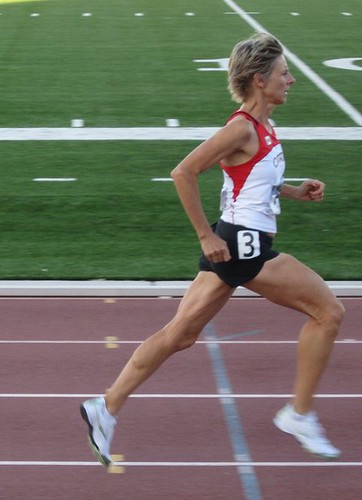
In this video, I will discuss the relationship between the motion of the arms, legs, and how they interact to increase stride frequency. Although most runners tend to attempt to change their stride frequency via thinking about their leg motions, it is far easier to affect stride frequency with the arms.

I hope you enjoy the video series. If you would like me to address any specific aspect of the RunSmart approach, drop me an email or add a comment to this article.

Read more...

The Paradox That Is World Cup Soccer

Wednesday, 21 July 2010 21:18 Written by Allan Besselink
The Adidas Jabulani is the official match ball...Soccer. The word can conjure up visions of almost religious quality. Every four years, the craziness ensues and the religion is played out on center stage. There has even been a goal attributed to the Hand of God (or Diego Maradona’s hand, you pick) – but more on that later.

On one hand, you have the beauty of a world-class athlete playing a sport that is elegant in it’s simplicity. There are few rules, and all you need are a pair of cleats and a ball. I had the opportunity to watch a couple of second round games in Dallas during the 1994 World Cup. Having played soccer in high school, I know what is involved. However, the game of soccer – played correctly and by skilled, world-class players – is absolutely elegant and beautiful. You witness the ability to perform magic with the ball. It truly is phenomenal.

And there are the players who oftentimes go by just one name. Kaka, for example. I think we need that in the US. I have no doubt it would improve the coolness factor, to go along with the inherent beauty of the game. It happens in big-time pro sports in the US already. Tell me, does Kobe have a last name? How about Tiger? Yeah I didn’t think so. Maybe that is what US Soccer is missing.

But on the other hand, you have the officiating. And yes, in retrospect, the 2010 World Cup had some absolutely lousy officiating. Along with the temper tantrums and political divisiveness that oftentimes follow soccer by the heels.

The officiating hit home – literally, and figuratively.

Read more...

More Articles...

  • Physical Therapists And Their Self Image: An International Perspective
  • Thoughts On Football, Soccer, And The 2010 World Cup

Page 96 of 167

Start
Prev
91
92
93
94
95
96
97
98
99
100
Next
End

RunSmart Book

Where To Buy RunSmartUp to 60% of runners will sustain an injury within any given year. Poor running mechanics, in conjunction with poor, ineffective and outdated training methods, can pose a significant injury risk. "RunSmart" was written to address these issues in the running community.

Featured Chapter

Clinical Orthopaedic Rehabilitation "Running Injuries: Etiology And Recovery- Based Treatment" (co-author Bridget Clark, PT) appears in the third edition and fourth editions of "Clinical Orthopaedic Rehabilitation: A Team Approach" by Charles Giangarra, MD and Robert C. Manske, PT.

Subscribe Now!

BP Manifestos

  • Smart Health Revolution
  • Vision Now

Most Popular Posts

  • The Deafening Silence
  • Three Common Examples Of Self Image, Self Sabotage, And Comfort Zones In Action
  • Patient Access To Physical Therapy And Groundhog Day
  • Evolution Or Revolution?
  • Learning How To Live
  • The Homeostasis Of Writing
  • Why HB 1263 Matters
  • The Flow Of Running, The Flow Of Life

Subscribe To My Newsletter

Allan Besselink

Allan Besselink, PT, DPT, Dip.MDTAllan Besselink, PT, DPT, Ph.D., Dip.MDT has a unique voice in the world of sports, education, and health care. Read more about Allan here.

PT Blog Awards

Top 5 finalist in three categories: "Best Overall Blog", "Best PT Blog" and "Best Advocacy Blog".

Connect With Me

PO Box 26161
Austin, TX 78755
512-222-6263


Copyright 2006-2023 Allan Besselink  | Terms Of Use | Privacy Policy |  Disclosure Policy |  FAQ

Powered By Mobius Intermedia