• Home
  • About
  • Besselink Project
  • Academia
  • Studio
  • Blog
  • Podcast
  • Testimonials
  • Work With Me

Allan Besselink

Nightmares In Health Care

Friday, 09 March 2012 15:55 Written by Allan Besselink

Nightmare ExpressI am sure you’ve experienced it. You are relaxing comfortably, fall asleep, then suddenly arrive at a terrifying dream in which you experience feelings of extreme anxiety. Then, you wake back up and realize it was all just a dream. It was nothing more than a nightmare.

I see the same thing in health care, and I keep hoping that I will wake up and realize it was all just a dream. But it’s not. As a PT in the sports world for 24 years, i have seen my fair share of nightmares in health care.  The most obvious and prevalent examples of these nightmares are the cases that are grossly over-treated or under-treated in the face of good scientific evidence and clinical reasoning – or lack thereof.

Sadly, these nightmares are recurrent in the world of sports medicine and orthopedics.

Read more...

Giving Thanks - 2010 Edition

Thursday, 25 November 2010 14:07 Written by Allan Besselink
giving thanksThanksgiving - a word that evokes many responses from many people.

For some, it is just another day. For others, it conjures up images of turkey and stuffing and pumpkin pie. It is a time to get together with family and friends. It is a time to give thanks for a bountiful harvest.

And for some, it may even be symbolic of the start of the holiday season, or the coming of Hanukkah, or the impending economic surge of the biggest shopping day in the nation, Black Friday.

Whatever you call it, and whatever meaning you place on it, today is Thanksgiving Day in the United States, a day of festive family traditions. On this day, people give thanks for a plethora of things. And I am no different in this regard.

It can be pretty easy to forget about, or just overlook, all those things that make our world brighter and more vibrant on a daily or moment-to-moment basis. And we all know that it has become far easier to find fault and lay blame than to simply tell someone that they have done a good job or that they bring something special to our world.

I think it is far more important to acknowledge the greatness in our world. If we all did this, I think the world would be a better place to live. I truly believe in being thankful for and appreciate the simple things in life that make our lives more vivid and much more passionate and loving.

So for Thanksgiving 2010, I present to you a list of things for which I am thankful:

Read more...

Wednesday, 07 March 2012 21:57 Written by Allan Besselink

201107-WMAThis is the 11th in a series of RunSmart videos. The series is on-going, with a new video released on a biweekly basis. These videos complement the material presented in the book “RunSmart: A Comprehensive Approach To Injury-Free Running”. The full series of videos can be found here. A compilation of the first 10 videos will be available on Vimeo as well.

For those of you that are interested in a more interactive learning environment, consider attending a Level One (half day), Level Two (one day), or Level Three (two day) RunSmart program. The Level One program is 4 hours and focuses on basic training principles and running mechanics. The Level Two program is 8.5 hours and focuses on injury prevention and performance optimization. The Level Three program is a two day, 15 hour program that includes a comprehensive approach to running injuries. The next Level One program will be offered in Austin on March 24, 2012. The next Level Three program will be offered in Reno, Nevada on May 5 – 6, 2012 at the University of Nevada.

In this video, I discuss verbal and mental cues. Many athletes try to micromanage their running mechanics - “place the foot here, don’t toe out, tilt the pelvis slightly” and similar biomechanical specifics. But sometimes a simple verbal or mental cue will suffice.

Read more...

Longhorns Update: Missing In Action

Sunday, 07 November 2010 13:49 Written by Allan Besselink

Longhorn & Football SculptureHere’s a question for you: If the pre-season coaches poll put the University of Texas Longhorns football team at number 4 in the nation, how much do coaches really know about football? One would have to wonder, given the depths that this team has sunk to over the past few weeks.

At least the AP poll had them at number 5 – maybe sports writers do know more about football than the coaches do. This is something they have maintained for years!

Better yet, let’s extend this thinking a bit further. If the polls are obviously so skewed from reality (we can thank the Longhorns for making that readily apparent), then how can we use their “collective wisdom” in the BCS rankings when they obviously have no relationship to much of anything?

And with that in mind, I’m left with all of the questions surrounding the Longhorns this season, and, more specifically, the questions of coaching or lack thereof on this squad. Or how about the lack of pride – or perhaps the sense of entitlement - displayed on field? Or how about a combination of the two?

It probably goes without saying that the last two weeks for the Longhorns have been the next closest thing to abysmal. Actually, it extends far beyond the last two weeks. The roots are far deeper than that.

Read more...

Training Myths: Long Slow Distance

Wednesday, 29 February 2012 23:52 Written by Allan Besselink

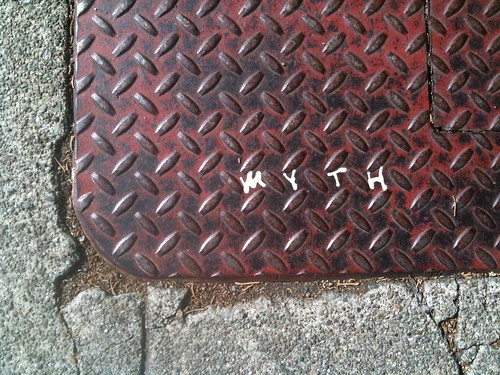
Myth Can Be Very Small And Right UnderfootOne of the primary bastions of endurance sports training concerns “logging in the miles”. Many call this LSD training – LSD standing for Long Slow Distance.

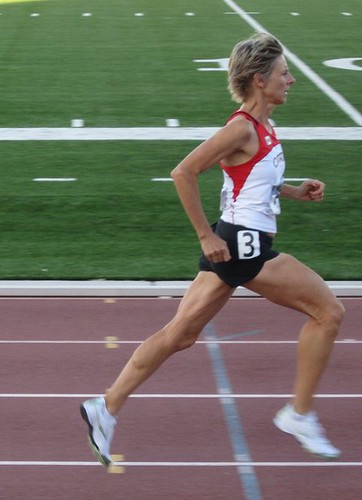
I always like to keep one phrase firmly in the forefront of my mind - “long slow distance makes for long slow [insert here: runners, cyclists, etc]”. The human body adapts to the training demands imposed on it. With that said, if you are training at a slow pace, then it stands to reason that you will get really good at running at a slow pace. I have yet to meet an athlete that was training to get slower.

You have probably encountered this thinking before – put in a bunch of miles at a slower pace in order to “build your aerobic energy system”. This will then lead to gains in endurance sport performance – or so the theory goes.

Read more...

More Articles...

  • NaNoWriMo 2010 Updates
  • Five Ways That MDT Will Change Orthopedics
  • Rhubarb Ruminations: Episode 5
  • Health Care And Humanitarian Efforts: A Double Standard?

Page 91 of 167

Start
Prev
91
92
93
94
95
96
97
98
99
100
Next
End

RunSmart Book

Where To Buy RunSmartUp to 60% of runners will sustain an injury within any given year. Poor running mechanics, in conjunction with poor, ineffective and outdated training methods, can pose a significant injury risk. "RunSmart" was written to address these issues in the running community.

Featured Chapter

Clinical Orthopaedic Rehabilitation "Running Injuries: Etiology And Recovery- Based Treatment" (co-author Bridget Clark, PT) appears in the third edition and fourth editions of "Clinical Orthopaedic Rehabilitation: A Team Approach" by Charles Giangarra, MD and Robert C. Manske, PT.

Subscribe Now!

BP Manifestos

  • Smart Health Revolution
  • Vision Now

Most Popular Posts

  • The Deafening Silence
  • Three Common Examples Of Self Image, Self Sabotage, And Comfort Zones In Action
  • Patient Access To Physical Therapy And Groundhog Day
  • Evolution Or Revolution?
  • Learning How To Live
  • The Homeostasis Of Writing
  • Why HB 1263 Matters
  • The Flow Of Running, The Flow Of Life

Subscribe To My Newsletter

Allan Besselink

Allan Besselink, PT, DPT, Dip.MDTAllan Besselink, PT, DPT, Ph.D., Dip.MDT has a unique voice in the world of sports, education, and health care. Read more about Allan here.

PT Blog Awards

Top 5 finalist in three categories: "Best Overall Blog", "Best PT Blog" and "Best Advocacy Blog".

Connect With Me

PO Box 26161
Austin, TX 78755
512-222-6263


Copyright 2006-2023 Allan Besselink  | Terms Of Use | Privacy Policy |  Disclosure Policy |  FAQ

Powered By Mobius Intermedia